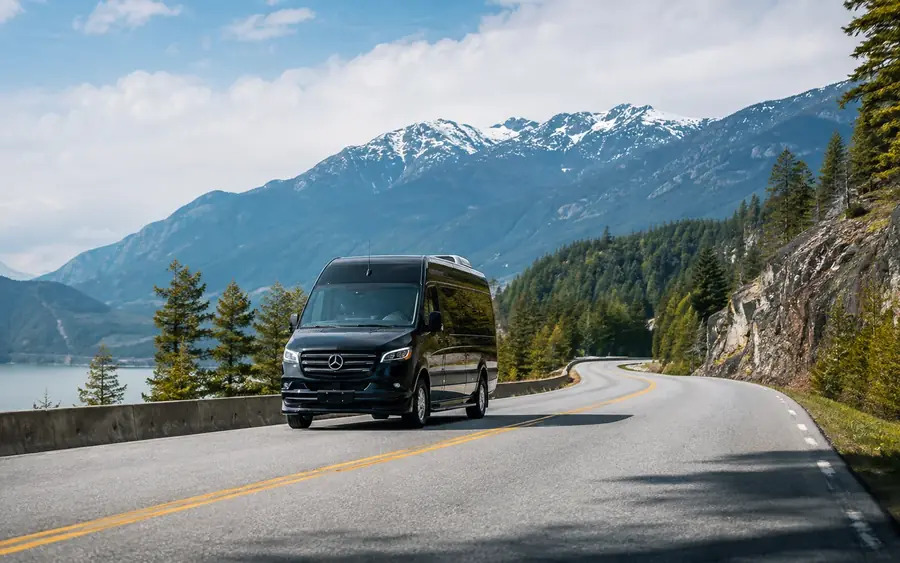
Long-distance travel changes vehicle priorities
For a two- or four-hour trip, seat comfort, luggage room and passenger breaks matter more than they do on a short city transfer. Choose the vehicle for the duration, not only the headcount.
Plan rest and meal stops
A direct private vehicle can stop when the group needs it. For families, seniors or business travellers, planned stops can make a long journey more comfortable without turning the schedule into an open-ended charter.
Weather and geography matter
Routes to mountain and interior destinations can be affected by weather, traffic and seasonal conditions. Use realistic travel windows and avoid building a same-day flight connection around an optimistic drive time.
Long-distance travel should be planned around comfort
Journeys beyond Metro Vancouver place more importance on seat comfort, personal space, luggage capacity and rest stops. A vehicle that works for a 30-minute airport transfer may feel cramped after several hours. Match the vehicle to the longest driving segment.
Weather and route conditions deserve flexibility
Mountain highways and regional routes can be affected by weather, incidents and seasonal traffic. The itinerary should avoid unrealistic arrival promises and include enough margin for the purpose of the trip. Fixed events such as flights or ceremonies should receive more conservative timing than flexible hotel check-ins.
One-way and return trips should be priced separately
A same-day return, overnight stay and one-way relocation create different vehicle and chauffeur requirements. Give the operator the complete travel plan before comparing quotes, including any requested stops and whether the vehicle needs to remain available at the destination.
When you are ready to compare a provider
After the route, timing and vehicle requirements are clear, you can Vancouver private transportation provider. Compare the provider’s current availability, complete quoted price, vehicle details and terms against the planning points in this guide before booking.